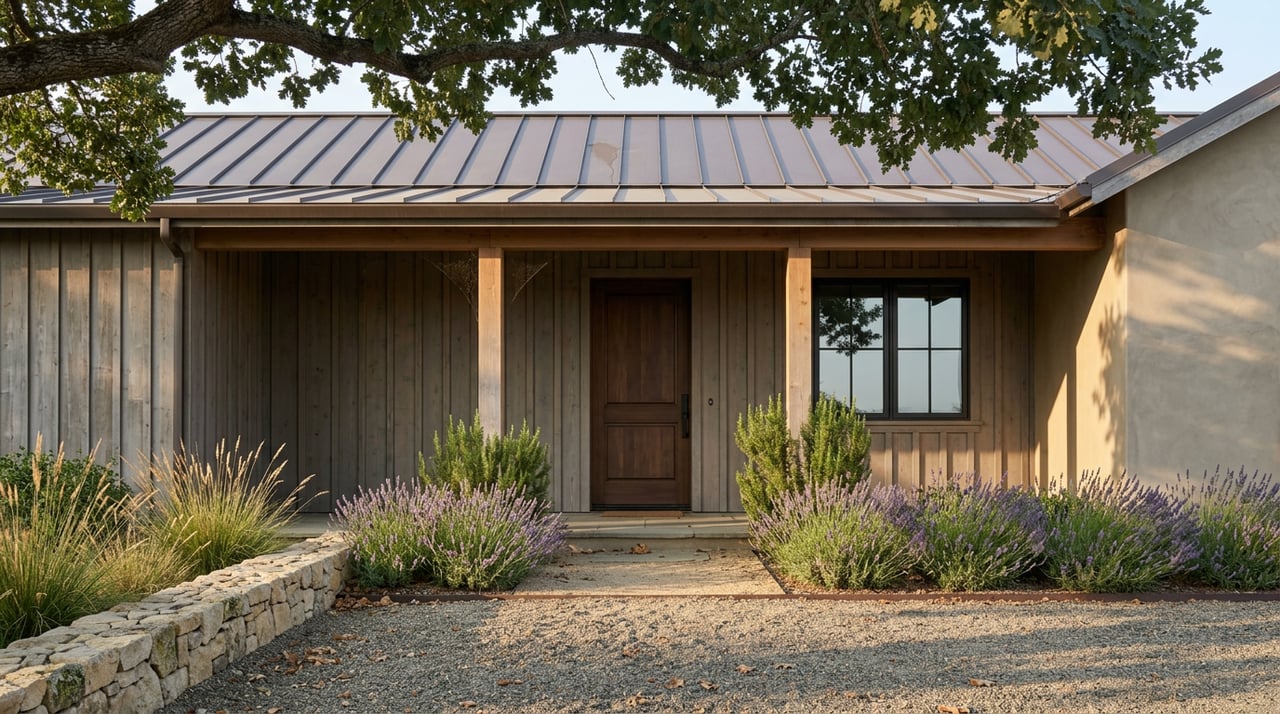
A family trust holding a vineyard-adjacent home in Sonoma Valley wants to list this fall. The house sits on a private well, and the well needs replacing before a lender will sign off on the sale. Then a headline crosses the seller's phone: a court just ruled on Sonoma County's well ordinance. Does that mean the permit is stuck? Does it mean the sale is off?
For most people selling or buying in Sonoma Valley, the answer is no. According to CEQA Developments, the August 4, 2026 ruling from California's First District Court of Appeal in Russian Riverkeeper et al. v. County of Sonoma is a split decision, and the part that makes headlines is not the part that touches an ordinary residential well. But for a smaller group of sellers and buyers, mostly those with hillside or vineyard parcels that need a new well permit, this ruling extends a permitting environment that has already been halted by court order once and reinstated once in the past two years. That distinction, not the ruling's existence, is the thing worth understanding before you write an offer or set a closing date.
What the court actually decided
The case traces back to April 2023, when, as Hanson Bridgett reported, the Sonoma County Board of Supervisors amended the county's well ordinance, codified in Sonoma County Code Chapter 25B, to add a Public Trust Review Area covering roughly 19 percent of the county. According to Courthouse News, Russian Riverkeeper and California Coastkeeper Alliance sued the following month, arguing the amended ordinance failed to meet the public trust doctrine's protections for waterways and skipped environmental review under the California Environmental Quality Act.
As the Press Democrat reported, a Sonoma County Superior Court judge sided with the environmental groups on both counts in August 2024. The county appealed. The First District's ruling in August 2026 split the difference: it found the county's process for balancing groundwater use against public trust obligations was adequate. As the San Francisco Chronicle reported, the court said the county had "gathered information, engaged the public, and subsequently balanced conflicting policy concerns." But it agreed with the trial court that Sonoma never conducted the environmental review CEQA requires before adopting the amendments, since, as Maven's Notebook reported, the county's own numbers showed roughly 95 percent of well applications would still be processed through ministerial review regardless of the new rules.
The upshot: the ordinance survives for now, but the county has to go back and do the environmental study it had not conducted, covering impacts to Chinook salmon, steelhead, and coho salmon in waterways the ordinance names directly, including the Russian River, the Petaluma River, and Sonoma Creek. The ruling is not final. Sonoma County could still ask the California Supreme Court to weigh in, and if it does not, as Hoodline reported, the case returns to Superior Court, now under Judge Jane Gaskell after Judge Bradford DeMeo's retirement.
How this permitting fight has actually played out
The legal back and forth matters less as a single event than as a pattern. Sonoma Valley sellers with wells have been living inside an on-again, off-again permitting environment since 2023.
When | What happened |
|---|---|
April 2023 | County adopts amended well ordinance and creates the Public Trust Review Area |
May 2023 | Russian Riverkeeper and California Coastkeeper Alliance file suit |
August 2024 | Trial court rules against the county on public trust and CEQA grounds |
October 2024 | Judgment entered invalidating the ordinance amendments; county appeals |
December 2024 | The Press Democrat reported that a court ordered the county to halt non-emergency well permitting, freezing 46 pending applications |
February 2025 | A NorCal Public Media report says a temporary court order allowed permitting to resume during the appeal |
August 2026 | Appeals court reverses on public trust doctrine, affirms the CEQA violation |
Sellers who had permit applications in process during the December 2024 halt faced uncertainty about the timeline. That is the risk this ruling extends rather than resolves. The county keeps permitting under the current framework while it works on the environmental review, but the litigation is not closed, and a future order could pause things again with little warning.
The line that actually matters: are you inside the review area
Here is the detail that separates a routine transaction from a complicated one. According to Permit Sonoma, the Public Trust Review Area applies only to wells expected to draw more than two acre-feet of water a year, and most residential parcels, including those with an accessory dwelling unit, guest house, or pool house, fall well under that threshold and require no water meter at all.
The friction shows up for parcels with higher-volume uses, working vineyards, larger irrigated landscapes, or agricultural accessory uses layered onto a residential parcel, especially where those parcels sit inside the mapped review area. If you are buying or selling one of those properties, or if your transaction depends on drilling a new well to replace one that failed or was never separately permitted, you are the reader this ruling actually affects.
Sonoma Valley's own groundwater basin adds a second layer worth knowing. According to Sonoma County Well Service, it is one of three groundwater sustainability agencies operating in the county, ranked Medium priority under the state's groundwater law, and portions of the Sonoma Valley subbasin have shown declining groundwater levels. That is not a reason to avoid a well-water purchase here. Wells have supplied Sonoma Valley homes for generations. It is a reason to treat well permit history as seriously as you would a septic inspection or a roof certification.
What this means before you list or make an offer
If you are preparing to sell a Sonoma Valley property with a private well, or you are under contract to buy one, a few checks now save weeks later.
- Pull the permit history for the parcel through Permit Sonoma's records lookup before you set a list price or a close-of-escrow date. Knowing whether a well was ever permitted, and when, tells you whether you are dealing with routine paperwork or a discretionary review.
- If the sale depends on a new or replacement well, ask directly whether the parcel falls inside the Public Trust Review Area.
- For estate and probate sales, build real slack into the listing timeline. The county was already ordered to halt non-emergency well permitting once, in December 2024
- According to Permit Sonoma, new dwellings in the county's designated marginal or scarce water zones require dry weather well testing, which has its own seasonal window and should be scheduled early rather than treated as a closing-week task.
A few questions worth answering directly
Is the ordinance still in effect right now? Yes. The appellate court left the ordinance in place while the county completes the environmental review the ruling requires. Permitting continues under the current rules unless a future court order says otherwise.
Could this go to the California Supreme Court? It is possible. The county has not said publicly whether it will seek further review, and until that window closes, the case is not fully resolved.
Where do I check if my Sonoma Valley parcel is inside the Public Trust Review Area? Permit Sonoma maintains an online map of the review area alongside its parcel and permit history lookup tools, and checking both before you list or make an offer is the single most useful step in this whole process.
The bottom line for your sale
This ruling is a headline that sounds bigger than it is for the average Sonoma Valley homeowner and exactly as big as it sounds for the smaller group with higher-volume or unpermitted wells inside the review area. Knowing which group you are in, before you set a price, write an offer, or promise a closing date, is what separates a smooth well-water transaction from one that stalls on paperwork nobody checked early enough.
Sonoma Valley real estate has always come with details like this, the kind that do not show up on a listing sheet but decide whether a sale closes on schedule. If you are weighing a sale or purchase involving a well, a vineyard parcel, or a property moving through probate, Suzanne Ashimine coordinates directly with the contractors, permit offices, and vendors who solve these problems long before they reach the closing table. Reach out to request a complimentary home valuation or consultation and get a clear read on where your property actually stands.
This article is general information, not legal, tax or financial advice. Consult a qualified professional about your situation.