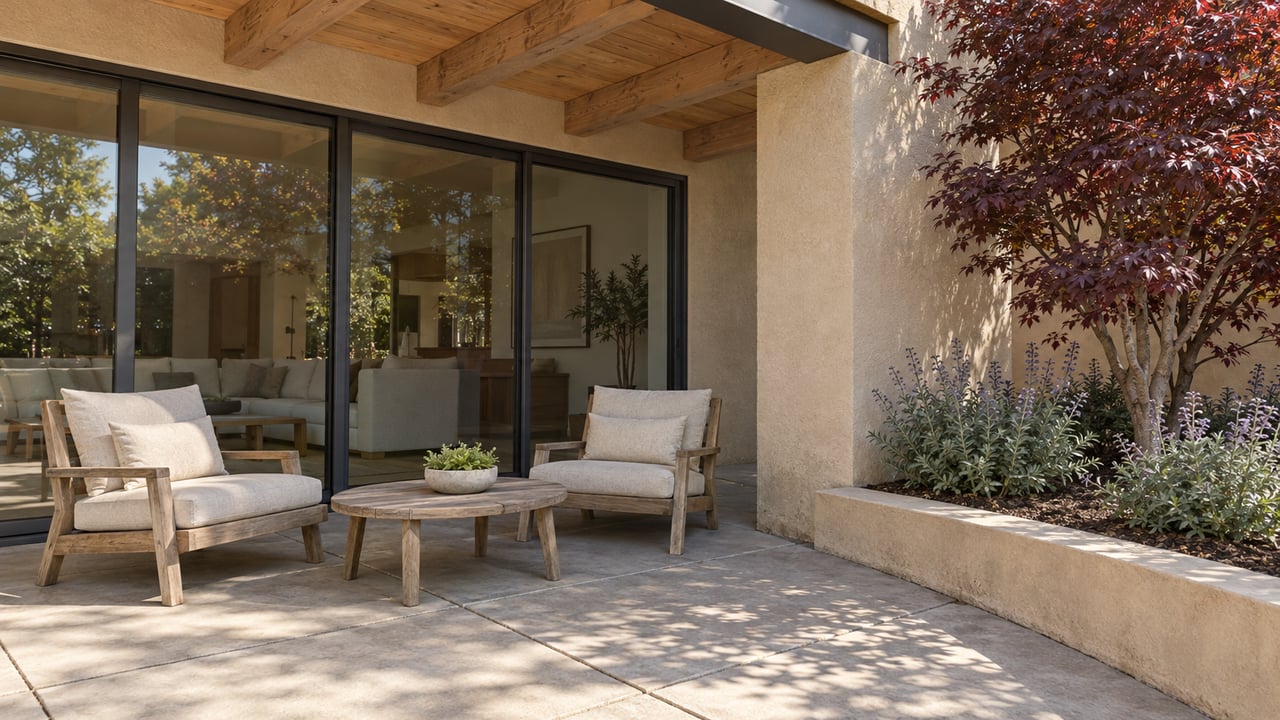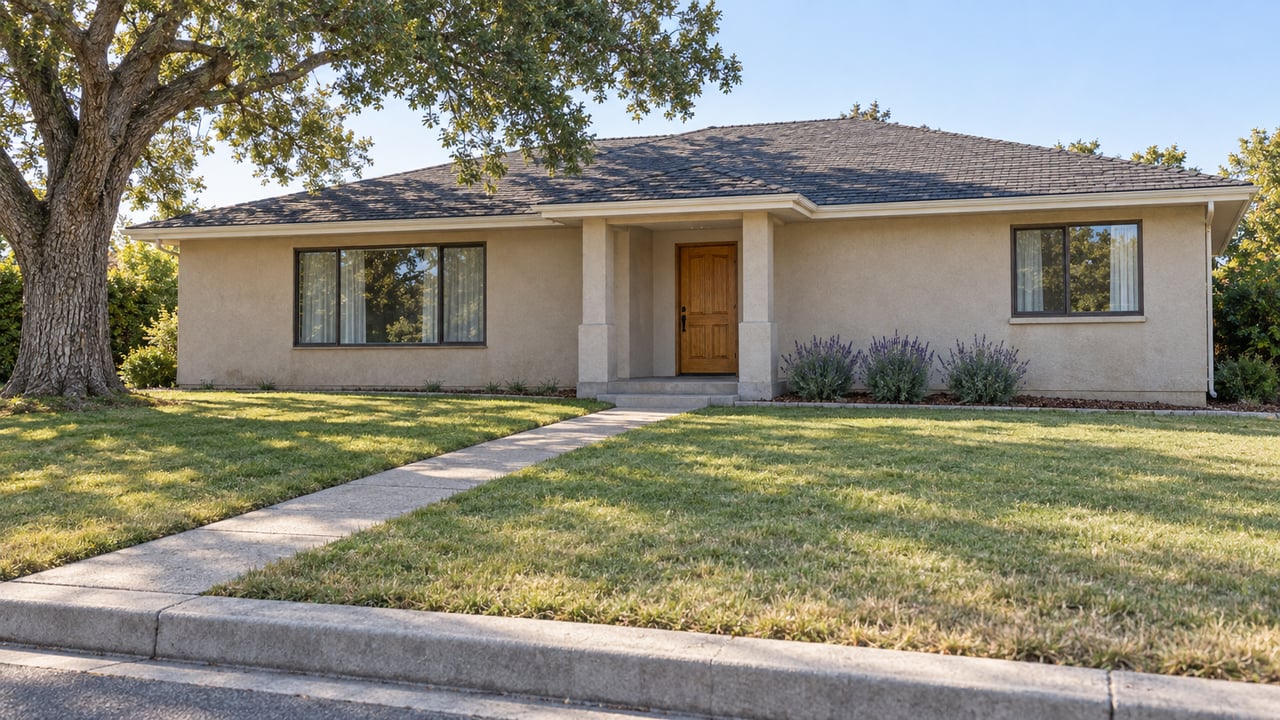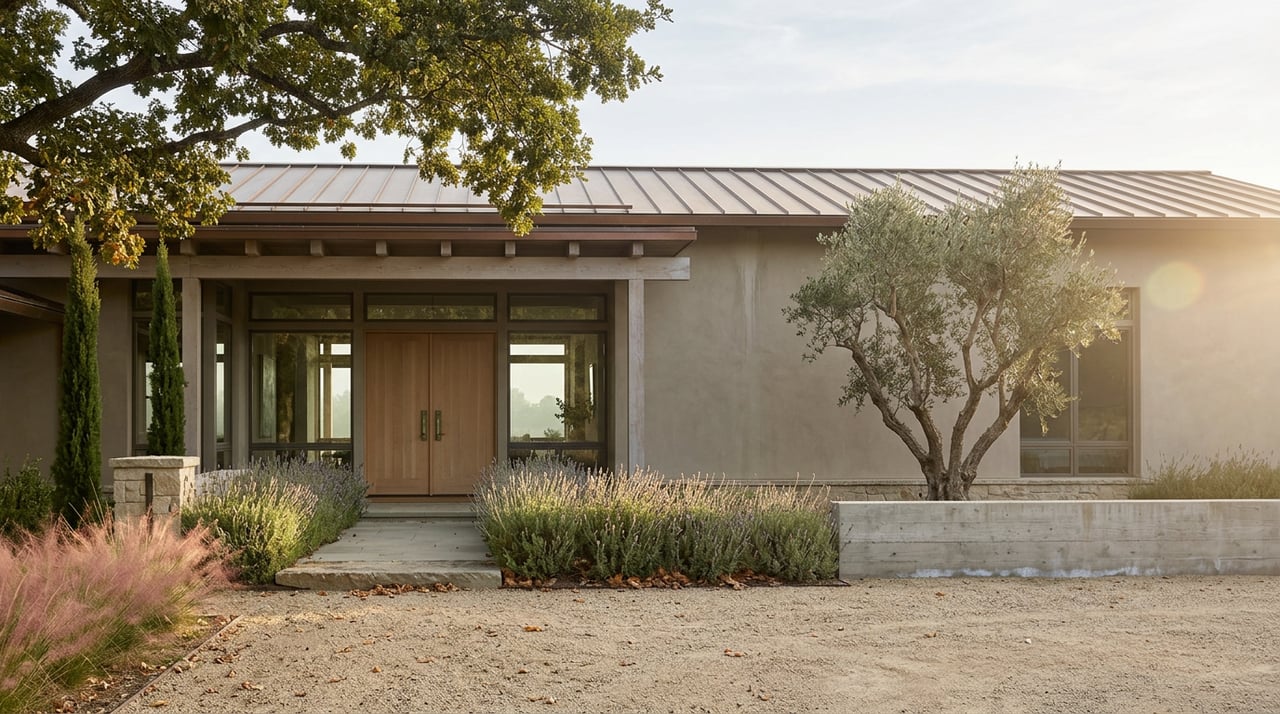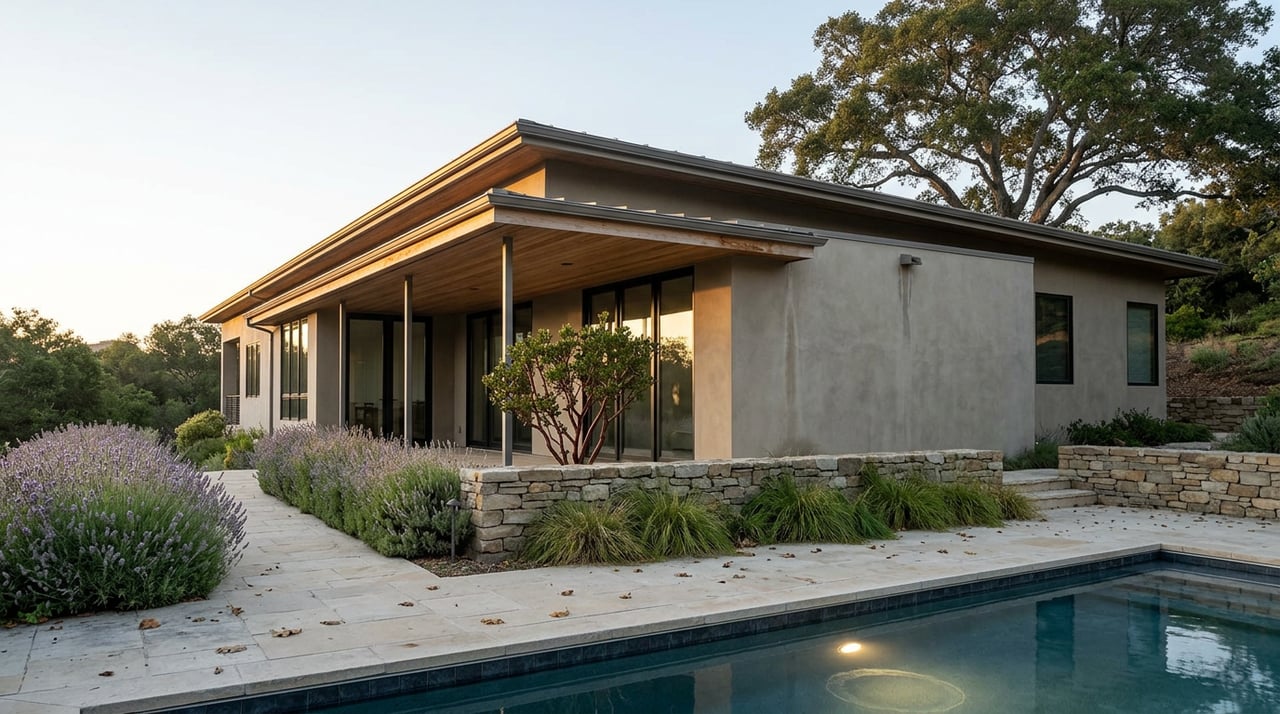
Picture two houses that hit the Santa Rosa market on the same week this September. Both are four bedrooms. Both were built within the last several years, on lots where the original homes were lost in the 2017 Tubbs Fire. Both list within a few thousand dollars of each other. One sits in Coffey Park, on a flat street a few blocks from Hopper Avenue. The other sits in Fountaingrove, tucked into a hillside a mile or two east.
A buyer scrolling listings sees two nearly identical opportunities. What that buyer does not see, at least not yet, is that one of these homes will glide through escrow with a standard insurance quote landing inside a week, while the other may need several rounds of shopping, a call to the California FAIR Plan, and a lender who understands what a Wildland-Urban Interface property requires before the loan contingency comes off. Same city, same rebuild era, same rough price point. Very different road to the closing table.
That gap is not about the age of the house. It is about where the lot sits, and it is the single most important thing a seller in Santa Rosa's fire-rebuild zones needs to understand before listing this fall.
The Fire That Drew the Map
The Tubbs Fire tore through Santa Rosa on the night of October 8, 2017, destroying close to 1,400 homes in Coffey Park and more than 1,500 in Fountaingrove, the two largest single-neighborhood losses in the city. The two areas started from the same disaster and diverged almost immediately. Coffey Park's lots sat on nearly identical footprints on flat, developed ground, so rebuilding moved in a fairly uniform wave. Fountaingrove's lots ranged from a fifth of an acre to well over an acre, some with golf course frontage, some on steep hillside parcels, and the recovery there stretched years longer. Reporting from the North Bay Business Journal found that construction costs in Fountaingrove ran substantially higher than in the flatland neighborhoods, and that a meaningful share of original owners chose to sell their burned lots rather than rebuild.
That history still shapes what a listing agent is working with today. Both neighborhoods are largely built back out at this point, but the terrain that slowed Fountaingrove's recovery is the same terrain that now complicates its insurance.
Why Newer Doesn't Mean Easier to Insure
Here is the part that surprises most sellers. The California FAIR Plan, the state's insurer of last resort, prices a policy as a rate applied per $1,000 of insured value, adjusted by a brush score tied to the property's Fire Hazard Severity Zone, with modifiers for construction age and documented hardening. Brush score follows terrain and vegetation exposure. It does not follow the year a house was framed.
That means a brand-new custom build on a Fountaingrove hillside lot can land in a higher-risk brush score bracket than a home built the same year on flat ground in Coffey Park, simply because of where the lot sits relative to open hillside. A newer roof and updated wiring help. They do not override geography.
The dollar difference is not subtle:
| Flatland neighborhoods (West End, Roseland, central Santa Rosa, most of Coffey Park) | Hillside rebuild zones (Fountaingrove, Mark West, Larkfield-Wikiup, parts of Bennett Valley) | |
|---|---|---|
| Standard-market insurance | Usually available without issue | Often unavailable; the FAIR Plan plus a difference-in-conditions wrap is common |
| Typical annual premium in 2026 | Roughly $2,000 to $4,000 | Roughly $8,000 to $25,000 |
| What drives the buyer's quote | Home age and condition | Terrain and brush score, sometimes outweighing new construction |
The California FAIR Plan's policy count grew from roughly 126,000 in 2018 to more than 400,000 by 2025, a trajectory that tracks closely with the years since the Tubbs Fire and the broader retreat of standard carriers from high-risk terrain statewide. That growth is why the FAIR Plan is no longer a rare, temporary stopgap in these neighborhoods. For a lot of Fountaingrove and Mark West buyers, it is simply the market.
A Rate Hike Landing in the Middle of Fall Listing Season
Sellers listing a hillside property this fall are working against a hard date. According to KQED, starting October 15, 2026, the FAIR Plan is raising rates by an average of 29.1% statewide, its largest increase in the program's history, affecting more than 675,000 policyholders. The size of the hike varies by ZIP code and risk profile. Some homeowners in lower-risk urban areas will actually see decreases. Others in high fire-risk terrain, the kind found across Fountaingrove and Mark West, could see their wildfire premiums double. As insurance broker Karl Susman told KQED, "it's definitely going to cause pain for some people."
If your Fountaingrove or Mark West listing goes live in September, the premium a buyer sees while shopping insurance in the first two weeks may be meaningfully different from what the same policy costs after October 15. A buyer who ran the numbers early in escrow and then discovers a higher renewal quote right before removing contingencies is a buyer whose confidence just took a hit at the worst possible moment in the transaction.
The Disclosure Timing That Decides Whether You Close
California's standard purchase contract already tells both sides that insurance for certain hillside, brush, and oceanfront properties may only be available through the FAIR Plan, and that buyers should consult their own insurance agent during the inspection contingency period. That advisory language exists because this exact scenario plays out often enough to write into the paperwork. The California Association of Realtors maintains disclosure guidance precisely because insurance status has become a routine point of friction in fire-zone transactions.
The mistake sellers make is treating that advisory as boilerplate rather than a cue to get ahead of it. If a buyer learns during contingency removal, rather than during the first week of showings, that a property can only be insured through the FAIR Plan at a premium that changes their monthly math, the deal is at its most fragile point. Waiting to disclose current carrier and policy terms does not avoid the conversation. It just moves the conversation to the moment when a buyer has the most leverage and the least patience.
According to Accredited Schools, California's disclosure law already requires sellers to reveal known material facts about a property regardless of an "as is" clause. The safer, and frankly simpler, path is to have the numbers ready before the first showing.
What to Have Ready Before You List
For sellers in Fountaingrove, Mark West, Larkfield-Wikiup, or the hillside pockets of Bennett Valley, a little preparation turns insurance from a late-escrow surprise into a routine line item:
- Your current insurer's name and annual premium, current as of this year, not a renewal from two years ago
- A copy of your policy's declarations page, ready to hand to a serious buyer's lender
- Documentation of any wildfire-hardening measures on the home, such as a Class A roof, ember-resistant vents, or maintained defensible space
- Permit history for any rebuild work completed since 2017, available through city records
- A recent bindable insurance quote if you can get one, so a buyer's lender has something concrete rather than a guess
None of this requires a public records deep dive on the buyer's part. It requires a seller who assembled the paperwork before the sign went in the yard, which is exactly the kind of groundwork that keeps a hillside sale on schedule instead of stalling three weeks before closing.
A Few Questions Worth Answering Directly
Does this affect flatland Santa Rosa neighborhoods too? Not in the same way. West End, Roseland, and central Santa Rosa generally insure through the standard market without the FAIR Plan overlay, so the disclosure stakes are lower there. The concentration of risk sits with hillside and Very High Fire Hazard Severity Zone parcels.
If my home was fully rebuilt after the Tubbs Fire, does that automatically make it easier to insure? Not automatically. Construction age is one modifier in the FAIR Plan's pricing formula. Brush score, tied to terrain and vegetation, can outweigh it, which is why two similarly new homes in Fountaingrove and Coffey Park can carry very different premiums.
Is there anything a seller can do to soften the pricing hit before listing? Documented hardening work is the most direct lever a seller has. Beyond that, getting ahead of the disclosure rather than waiting for a buyer to discover it during contingency removal is the difference between a smooth escrow and a renegotiation.
Insurance has quietly become one of the biggest variables in whether a Santa Rosa fire-rebuild sale closes on schedule. Homeowners who lived through the Tubbs Fire and rebuilt their own homes know this instinctively. Buyers, and often their agents, are still catching up.
If you're weighing a fall listing in Fountaingrove, Coffey Park, Mark West, or Bennett Valley, getting the insurance picture right before the first showing is worth a real conversation, not a last-minute scramble. Suzanne Ashimine works through exactly this kind of pre-listing groundwork with sellers across Sonoma Valley, coordinating the paperwork, the vendors, and the timing so nothing surprises a buyer three weeks before closing. Reach out for a complimentary home valuation or consultation to talk through what your specific address needs before it goes live.
This article is general information, not legal, tax or financial advice. Consult a qualified professional about your situation.