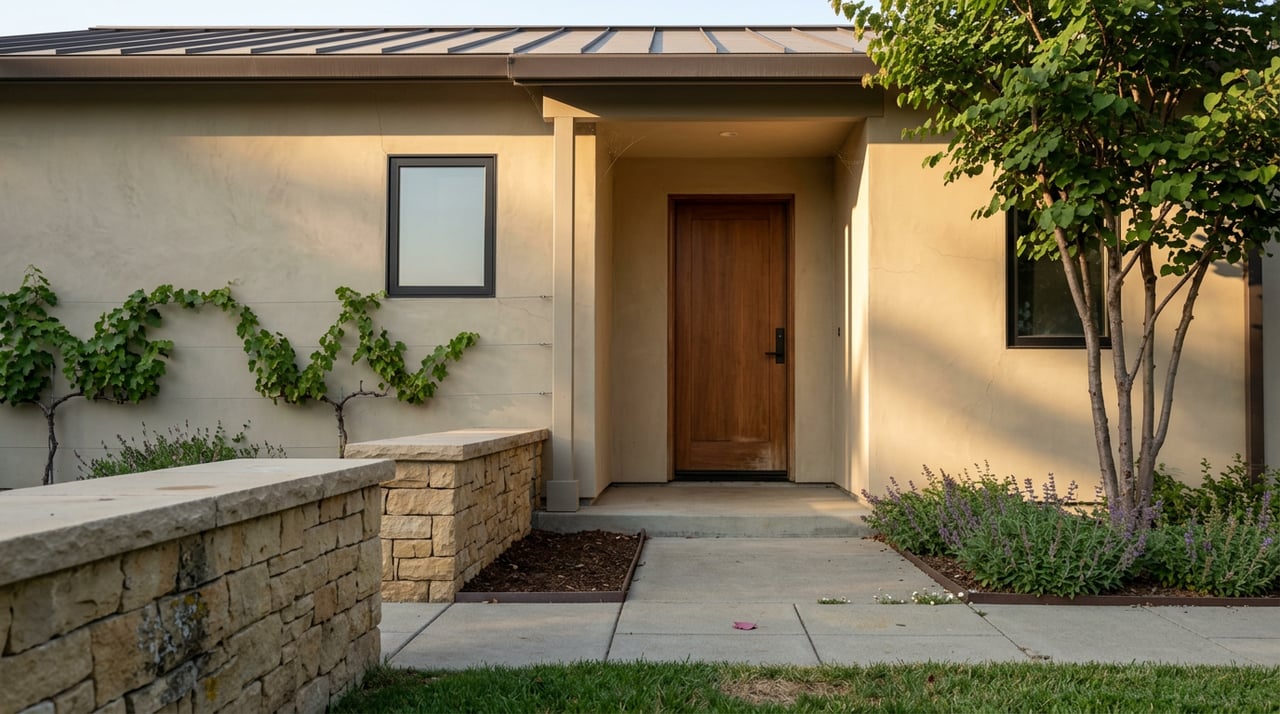
According to the Napa Valley Register, in 2022, the investors behind Stanly Ranch, the luxury resort and residential project on Napa's southern edge, raised the price of its vineyard villas by roughly $1 million each, from about $3.66 million to $4.79 million. Before the increase, roughly 60 potential buyers had shown real interest. After it, according to a lawsuit the project's developer filed in March 2026, none of them signed a contract.
By October 2025, the ownership group had defaulted on a $235 million construction loan, with more than $230 million outstanding. A foreclosure auction followed in March 2026, and the hotel portion of the property sold to Blackstone for $195 million. The vineyard homes and villas were not part of that sale.
You do not need a nine-figure resort to see how a headline price can obscure what is happening on the ground. Across ordinary Napa neighborhoods, a smaller version of that problem is playing out right now, and it is why the city's median home price is a much less useful number than it looks.
The Citywide Number Two Data Platforms Can't Agree On
For February 2026, one major home-data platform put Napa's citywide median sale price at $812,000. Another, pulling from its own closed-sale records for the same month, put it at $1,014,995. That is a gap of more than $200,000, for the same city, in the same month.
Neither number is wrong exactly. They are built from different pools of closed sales, weighted differently, updated on different schedules. But the size of the disagreement is itself the finding. If two data platforms cannot land within $200,000 of each other on what Napa typically sold for, a single citywide figure was never going to tell you much about the specific block you are watching.
A median is a fact about last month's closings. It is not a fact about your street.
That is worth sitting with, because the citywide number gets quoted as if it describes one market. Napa does not have one market. It has several, and they are behaving differently enough that comparing your target neighborhood to the city average will mislead you more often than it helps.
Four Neighborhoods, Four Different Stories
Here is what the same spring looked like across four parts of town.
| Neighborhood | Recent Median | Change | What's Driving It |
|---|---|---|---|
| Central Napa | About $730,000 (January 2026) | Down about 2.7 percent year over year | Older housing stock, entry-level buyers, slower absorption |
| Browns Valley | Around $1.2 million (March 2026) | Up about 4.5 percent year over year | West-side location, thin inventory, but far fewer transactions closing |
| Alta Heights | $1.3 million over the trailing three months (through May 2026) | Up nearly 50 percent year over year | A handful of view-premium sales, not broad appreciation |
| West Napa | About $978,000 (March 2026) | Down 50 percent year over year | Extremely thin sales volume, a few atypical closings swinging the number |
The spread between Central Napa and Browns Valley alone is close to half a million dollars, inside the same city limits. That is the first thing worth knowing if you are comparing neighborhoods on price. The second, more useful thing, is what is happening underneath those numbers.
The Number That Actually Predicts Your Experience
Price tells you where a neighborhood landed. Days on market tells you how hard it worked to get there.
In Browns Valley, the median sale price rose about 4.5 percent between March 2025 and March 2026, holding its position as one of the city's stronger west-side corridors. But average time on market during that same window jumped from about 40 days to 143 days. Only 13 homes closed in March 2026, compared to 14 the year before, so the pace of actual sales barely moved even as the price held.
That combination, a stable or rising price alongside a much longer sales cycle, usually means something specific: sellers are not cutting price to move faster, they are simply waiting longer for the right buyer to show up. It is not the same as strong demand. It is closer to a standoff, where list prices hold and the market slows down around them.
For a buyer, that is useful information. A "rising" median in Browns Valley does not mean you are competing against a wave of offers. It may mean the opposite, that homes are sitting and sellers have more room to negotiate than the headline price suggests. For a seller, it is a caution against assuming last year's pricing playbook still applies. A 5 percent overprice this spring costs real carrying time, not just a slower close.
Why Alta Heights and West Napa Are Nearly Impossible to Trust on Their Own
Alta Heights posted the most dramatic move of any Napa neighborhood this year, a median up close to 50 percent over the trailing three months. It is also a number I would trust least without more context.
Only nine homes sold in Alta Heights in May 2026, down from 11 a year earlier. In a neighborhood that small, one or two view-premium properties closing in the same window can swing the median by tens of thousands of dollars, or more. The same data shows Alta Heights' price per square foot actually fell about 16 percent year over year even as its median price jumped nearly 50 percent, a contradiction that only makes sense if the mix of homes selling changed dramatically, not the underlying value of the neighborhood.
West Napa tells the same story from the opposite direction. Its median sale price fell 50 percent year over year in March 2026, while its price per square foot rose about 84 percent over that same span. A neighborhood cannot genuinely become half as expensive and 84 percent more expensive per square foot in the same twelve months. What actually happened is that the size and type of home selling changed from one year to the next, in a market too thin to average out the difference.
A large year-over-year percentage change built on fewer than a dozen closings is not a trend. It is a coincidence wearing a trend's clothing.
What to Check Before You Trust Any Neighborhood Number
- How many homes actually sold behind the median. Single-digit or low-double-digit monthly sales mean one closing can move the number significantly.
- Whether days on market is moving in the same direction as price, or against it.
- Whether price per square foot agrees with the median trend or contradicts it, as it does right now in Alta Heights.
- Whether a large development or estate sale closed in that window, which can pull a small neighborhood's average or median in a direction the rest of the market is not actually moving.
What This Means If You're Buying or Selling This Year
For a move-up seller in a place like Browns Valley, the lesson from this spring is that a strong median does not guarantee a fast sale. Pricing discipline at list, not last year's comp, is what keeps you out of the 143-day column.
For a relocating buyer weighing Napa against nearby towns, the more useful exercise is deciding what kind of neighborhood you actually want, then pricing that specifically. Central Napa sits closer to downtown's shops and restaurants at a meaningfully lower price point than the west side. Browns Valley carries its own neighborhood rhythm, anchored in part by Browns Valley Market, a locally owned grocery that has served the west side since 1980 and functions as much as a gathering spot as a place to buy groceries. Coombsville, on the southeastern edge of the valley, trades density for quiet, a rural stretch of rolling vineyards where neighbors describe a close-knit, peaceful pace of life rather than a walkable downtown one.
None of those neighborhoods should be evaluated against the citywide median. They should be evaluated against each other, and against the specific comps on the specific street you are considering.
A Few Questions Worth Answering Directly
Is Napa's housing market cooling or holding steady in 2026? It depends entirely on which data source and which neighborhood you ask about. Two major platforms disagreed by more than $200,000 on Napa's own citywide median for the same month in early 2026, and neighborhood numbers are pulling in different directions at once: Browns Valley slowing in pace while its price holds, Alta Heights and West Napa swinging on thin sales volume in opposite directions. There is not one Napa market moving in one direction this year. There are several, and they disagree with each other as much as the data sources do.
Does a rising neighborhood median mean homes are selling faster there? Not necessarily. Browns Valley's median rose this spring while its average days on market more than tripled. Price and pace can move in opposite directions, and when they do, pace is usually the more honest signal.
What actually happened to the villas at Stanly Ranch? The resort and hotel portion of the property sold through foreclosure to Blackstone in March 2026. The vineyard homes and villas, the residential piece at the center of the pricing dispute, were not included in that sale, and their status remains a separate, ongoing story.
Napa's price data rewards patience more than speed reading. A citywide median makes for a clean headline, but the neighborhood you are actually considering is telling its own story, in its own numbers, on its own timeline.
If you are trying to make sense of what a specific Napa neighborhood is doing right now, or you want a second opinion before you price a listing or write an offer, Suzanne Ashimine offers a complimentary home valuation or consultation to walk through the comps that actually apply to your street.